Waccamaw
Light Artillery
Experience Civil War artillery through living history, reenactments, and cannon demonstrations. Our reenactment unit portrays the Waccamaw Light Artillery, sharing its history and helping visitors understand the work of an artillery crew.
Interested in joining us or learning more? Get in touch through our unit contact form or Facebook page.
Interested in joining?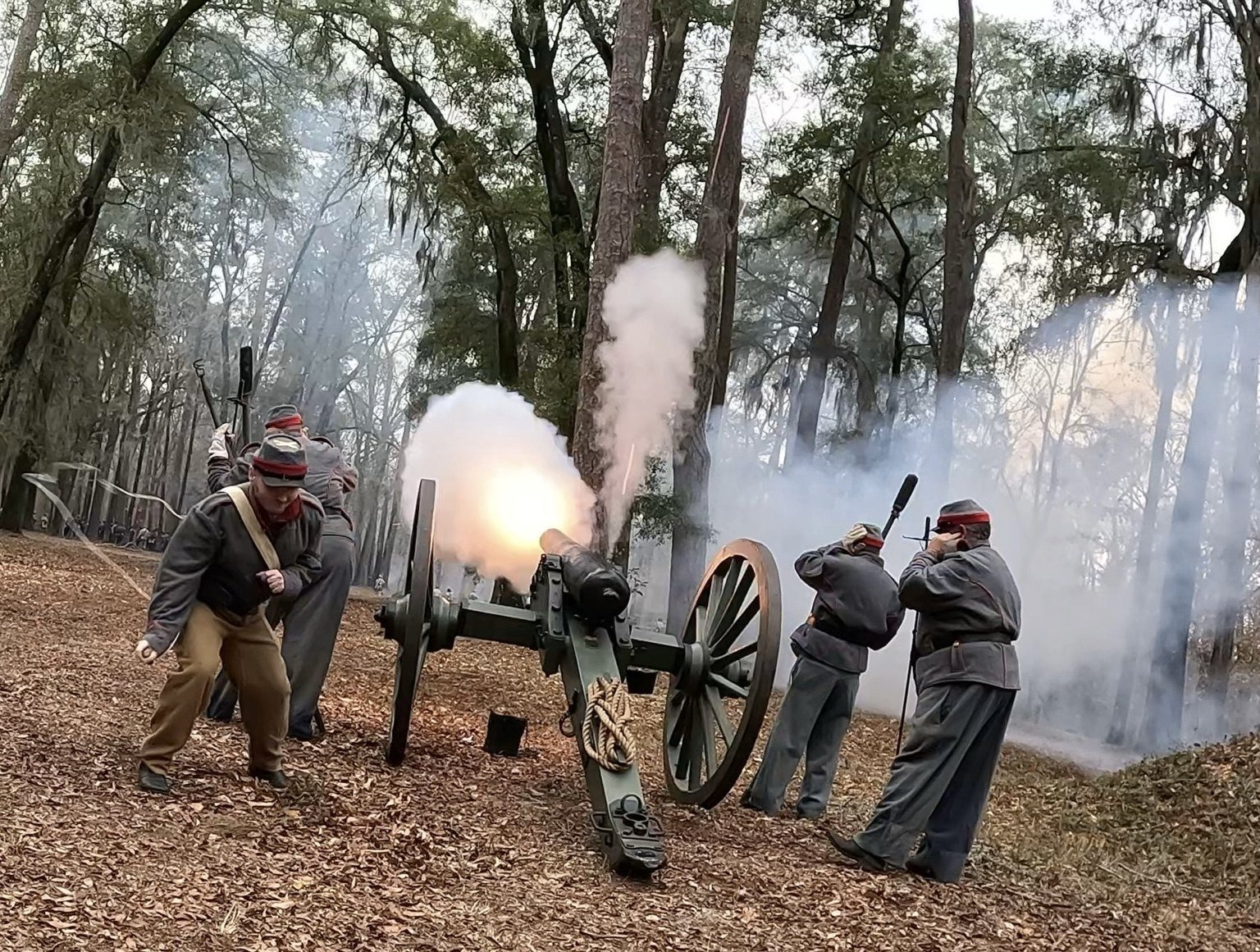
The history behind the portrayal
The present-day living history unit is a separate organization from the original Civil War battery. Explore the revised historical account below or download the complete approved report, including its source guide and research qualifications.
1. Coastal service and organization in 1861
The company was active before its December 1861 incorporation and January 1862 Confederate muster. Captain T. W. Daggett later described an offer of service for the All Saints coast on 16 January 1861 and orders in February and March. A contemporary newspaper placed Waccamaw gun detachments at a Fort Randall flag presentation on 21 March and identified detachments at both Fort Randall and Fort Ward. An April report counted 26 men and two officers on a specified coast-guard sector; that was a detachment figure, not the whole company. [S01, S44, S45] An April notice called for drill and a first-lieutenant election on 23 April. A second notice in the Horry Dispatch of 18 April repeated the announcement. Neither notice supplies the election result. Daggett submitted a resignation dated 1 June and identified Lieutenant J. Ward as holding command, but the final gubernatorial acceptance and formal appointment remain missing. [S02, S45, U03] The Horry Dispatch of 20 June directly attested a Waccamaw detachment at Conwayboro with artillery and accoutrements and recommended storage accommodation. A 24 June account then placed Lieutenant Causey with a detachment providing a ceremonial escort and seven-gun salute. A July committee report again proposed storage, and an August notice named the Kingston Detachment under Causey for drill at Conwayboro. These are dated witnesses, not proof that one unchanged detachment occupied every named post continuously. The relationship among Kingston, Conwayboro, Fort Randall, Fort Ward and the main company is still incomplete. [S48-S50, U04] South Carolina ratified the incorporation act on 21 December 1861. It provided an organizational framework within the state militia, but the company had been active for months. Statutory incorporation
and Confederate muster should not be conflated. [S03]
2. Confederate muster and Georgetown duty
A later official abstract of the wartime muster records Confederate service beginning 20 January 1862. Its filing title uses Captain Mayham Ward while the copied roll caption refers to Captain J. Ward; the later filing title does not make Mayham the January captain. Camp Weston medical accounts were certified by Joshua Ward. The company was associated with the Georgetown defenses, and Pemberton agreed in April that Ward’s field battery could continue its existing service near Georgetown for the time being. [S04, S06, S36, S51] A letter from Joshua Ward to General Pemberton, headed Georgetown, 20 April 1862, reports 119 men in camp. Ward sought a fourth lieutenant, proposing a man surnamed Allston instead of calling an election for that vacancy. The reverse docket is read as received on 23 April. The 119 is Ward’s dated statement, not a final roster, audited effective strength or number of gun crewmen. Allston’s full name, appointment, acceptance and service are not proved by this request. The institutional accession, box and folder citation for the supplied scans remains pending. This 1862 request does not answer the separate April 1861 election question. [U02] The May-June station abstract reads Camp Ward near Georgetown, and the July-August abstract reads Laurel Hill. Camp Ward cannot be equated with Fort Ward on name alone. Four known individual abstracts in the May-June period - the three Cox entries and W. C. Souls - record absence at Stono Landing. The cards locate these men in the records; they do not identify their mission or establish Waccamaw participation at Secessionville. [S04, S22-S24, U10]
3. The Black River action
On 14 August 1862 a section of Ward’s artillery stood in works near Mrs. Sparkman’s plantation on Black River. Union vessels Pocahontas and Treaty fired on the position. The Union commander identified capturing Ward’s pieces as an objective; the Confederate report heard the fire but lacked direct communication with the section. The Union account says the artillery did not answer and relays an informant’s report of withdrawal. The sources establish exposure to naval fire, but not that Waccamaw guns fired, that guns were captured, or which complete crew served there. Conflicting casualty estimates must not be turned into a settled count. [S06, S10] Subsequently examined Ward files name additional men on Black River detached duty, including Tarbox, Gore and the Joseph Smith filing sequence. Those entries add individual service witnesses. They do not create a complete section roster or make several cards from one roll independent eyewitness accounts. A late August estimate of about 100 men concerns the battery as a whole at a later date, and cannot be substituted for the 14 August section strength. [S37, U09, U11, U13, U17]
4. Battery White, Frazer’s Point and the field guns
Company station abstracts repeatedly name Battery White, but that administrative station does not assign the fort’s heavy pieces to Waccamaw. Trapier’s 3 February 1863 report put Captain Warley’s men with the nine guns at Battery White and a detachment from Ward’s company at Frazer’s Point. He reported Ward’s manpower as reduced to no more than one field-battery section. A December armament proposal for Frazer’s Point does not by itself prove delivery of each proposed piece. [S04, S06] The dated 3 May 1864 field armament return lists three 6-pounders and one 3.5-inch Blakely rifle for Waccamaw. It does not establish that exact outfit in every year or connect the company to every Battery
White gun. A July 1863 request for serviceable guns and heavy-gun chassis also requires separation of request, authorization and receipt. [S07, S34] A July 1864 register summarizes Major C. K. Huger’s report that four Columbiads shipped for Georgetown were at Pee Dee Bridge; the letter was dated 20 July and registered on 2 August. Ripley’s 22 July instruction asked Captain B. H. Read about the position of new guns and their carriages. The operative reading is “new,” not “two.” Neither document proves Waccamaw crew assignment, final delivery to Battery White, or identity with the other document’s guns. Different October 1864 intelligence estimates of the fort’s heavy armament also remain conflicting estimates. [S53, U15, U16]
5. Capture aboard Queen of the Wave
Seven named Waccamaw men were captured aboard the wrecked Queen of the Wave on 25 February 1863: P. R. Lachicotte, W. A. Woodward, F. Justice, M. Vaught, D. A. Sperry, E. Hughes and B. F. Vereen. Fort Lafayette records establish their later confinement and a 7 April release to Lieutenant Charles Muhlenberg for Fortress Monroe. The apparent prison admission date and derivative card dates differ. The capture, list, admission, transfer, delivery and exchange dates are separate documentary events. [S10, S12-S14] Later filed abstracts for Sperry, Hughes and Justice name Quaker City transport and cite a Draper list dated at New York on 16 March. That is stronger than the earlier evidence of Du Pont’s transport intention, but the list date is not a proved vessel arrival day and the three abstracts may rest on one underlying list. Shared roll 30, sheet 2 abstracts contain April and May stages with conflicting implications when compared with the Fort Lafayette register. The original roll and Manuscript 744 are still needed before a complete route and exchange can be assigned to all seven. Subsequent company cards improve the individual return-to-service picture without fixing each man’s exact day of return. [U12, U19]
6. The people and work behind the guns
The records follow far more than gun drill. They document farrier Ellick, musician Jordan, medical services by Arthur B. Flagg, horse compensation, ordnance needs, hospital and supply work, and detached assignments. Period racial labels in the service records do not establish Ellick’s or Jordan’s legal status, circumstances of service or personal motives. No surname for Ellick or instrument for Jordan has been securely established. [S04, S25-S26, S51] The 11 August 1862 departmental transfer order directed six privates from Joshua Ward’s artillery to Abney’s sharpshooters. Reinspection corrects provisional readings to D. Flowers and W. Dorman; another difficult surname remains unresolved. Receiving files then supply subsequent presence for Flowers and a hospital-steward entry for Dorman. Marsh’s recovered order directs a transfer to Tucker effective 1 January 1863, but implementation still requires a receiving trail. Edwards’s receiving file records a transfer to Captain Stanley’s artillery without settling the captain’s full identity or subsequent service. [U05-U08] Flowers later appears on Ward cards following a return from the sharpshooters, with conflicting 28 August, 30 August and 1 September 1863 dates across files. His 1864 records add Charleston and cook or commissary details. Ricks now has dated Ward service and a July 1862 discharge entry. Sanders or Saunders has an April 1864 transfer entry toward Rutledge Cavalry. Wilson has a recorded April 1864 receiving exchange and Black Mingo store-guard duty. Barnhill has repeated company presence, a late August 1864 furlough and a September absence entry. These personal records supersede the older “filing only” descriptions, without turning individual movements into company movements. [U09]
Souls’s October 1863 card records a mission to bring one artillery section from Kingstree. It does not identify the section’s unit, guns, route or the whole battery’s location. His later transfer order to a North Carolina unit and receiving file support subsequent individual service. A Fort Fisher capture in that later file belongs to Souls after his Ward service, not to Waccamaw as a unit. Justice has a named Santee Bridge guard detail; that too is an individual assignment rather than a whole-company station. [U10-U12]
7. Command, inspection and movement in 1864
Joshua Ward requested resignation in June 1864. A 4 August letter still addressed Mayham Ward as lieutenant; an August promotion trail followed, and by 12 August Mayham was functioning as captain. The broad succession is substantially established, but the final central acceptance, complete operative promotion paragraph and exact handover date remain missing. A temporary command reference or a premature title in a separate order does not replace this sequence. [S15, S17, S27, S54] Gaillard’s 31 August inspection at Battery White rated appearance, drill and discipline good while finding the company badly in need of shoes, with some men barefoot. It listed specific equipment quantities but did not describe a complete standard kit. Gore’s individual 10 May 1864 paid receipt for a jacket and trousers establishes his transaction, not the color, cut, supplier or uniform of every man. The exact Waccamaw uniform in any particular year remains unresolved. [S28, U13-U14] An order of 17 September sent the company to Florence; the company events abstract records departure from Georgetown on the 19th and arrival on the 21st to guard Federal prisoners. Guns, horses and sections traveled by different combinations of steamer, march and railroad through Mars Bluff and Pee Dee Bridge. The return march toward Georgetown is recorded, but without a precise arrival date. This named company movement controls over an unnamed light-company report in outside testimony. [S05, S09, S53]
8. The final documented months
The 31 January 1865 departmental return still carried the company under Captain Mayham Ward. In a sworn July pardon petition, Mayham said he had served as captain through November 1864 and had then been kept out by illness. The return is an administrative record and the petition a retrospective personal statement. Together they do not name the officer actually commanding each later day. [S08, S16] The 10 January subdistrict order directed that a J. Smith identified with Waccamaw and a Booth of Company B, South Carolina Siege Train, be shot on 13 January. Its existence does not prove execution. A later archival filing link explicitly associates Ward’s J. Smith file with Joseph Smith, but the bridge to the man in the execution order and his full civil identity still need care. A compiled Booth reference card records suspension of a death sentence under a 12 January Hardee order. Its original operative text is not acquired; the card does not name Smith as covered, resolve the J. S./James T. Booth initials conflict, or establish either man’s final fate. [S46, U11] The alleged 9 February relief of Ward’s battery by Bridges’s battery remains unauthenticated as an operative order. Union records establish the evacuation and occupation of Battery White on 23 February, not the identity of every departing company or gun crew. A March naval report calls William I. Gore a former lieutenant of Ward’s battery. Gore’s now complete company file adds service, clothing and court records, but still does not fix his departure mechanism or exact date. [S11, S42, U13-U14] Jordan, Sperry and Justice have individual Bridges or Greensboro filing or parole abstracts, with blank personal parole dates. The original Greensboro list 290 has been located to the range of lists 286-440 on M1781 reel 4, but the list itself has not been read. Filing envelopes and personal records do not demonstrate that the intact Waccamaw battery became Bridges’s battery or surrendered collectively. No
whole-company participation at Fort Fisher, Averasboro, Bentonville or Secessionville has been established by the present sources. [S26, S30, U18]
9. Findings and boundaries
The history now documents early coastal detachments, Confederate muster, Georgetown defense duty, a section exposed to naval fire on Black River, the Frazer’s Point post, individual captivity and work, a dated field armament, command succession, a Florence prisoner-guard assignment and fragments of the final months. The strongest recent gains concern named people and specific documentary stages. They do not close the final collective itinerary. The fifteen-question register remains one substantially closed subject, ten partial subjects and four open or corrected open subjects. Exact uniform is separately open. These are research classifications, not a percentage of the history recovered. The research closeout target in the existing index is 1 January 2027; this edition does not imply all missing originals will be acquired by that date.
As new information is found and verified in primary sources, we will update this history and its citations.
Download the full history · PDF · 65 pagesSource keys in brackets refer to the report’s source guide: S01–S56 in Appendix E and U01–U20 in the later source notes. The revised account and correction register govern older appendix wording. Edition: 28 October 2026.
Upcoming events
Waccamaw Light Artillery at SwampFest
Playcard Environmental Education Center
10729 W Highway 19, Loris, SC
Free admission · All ages welcome
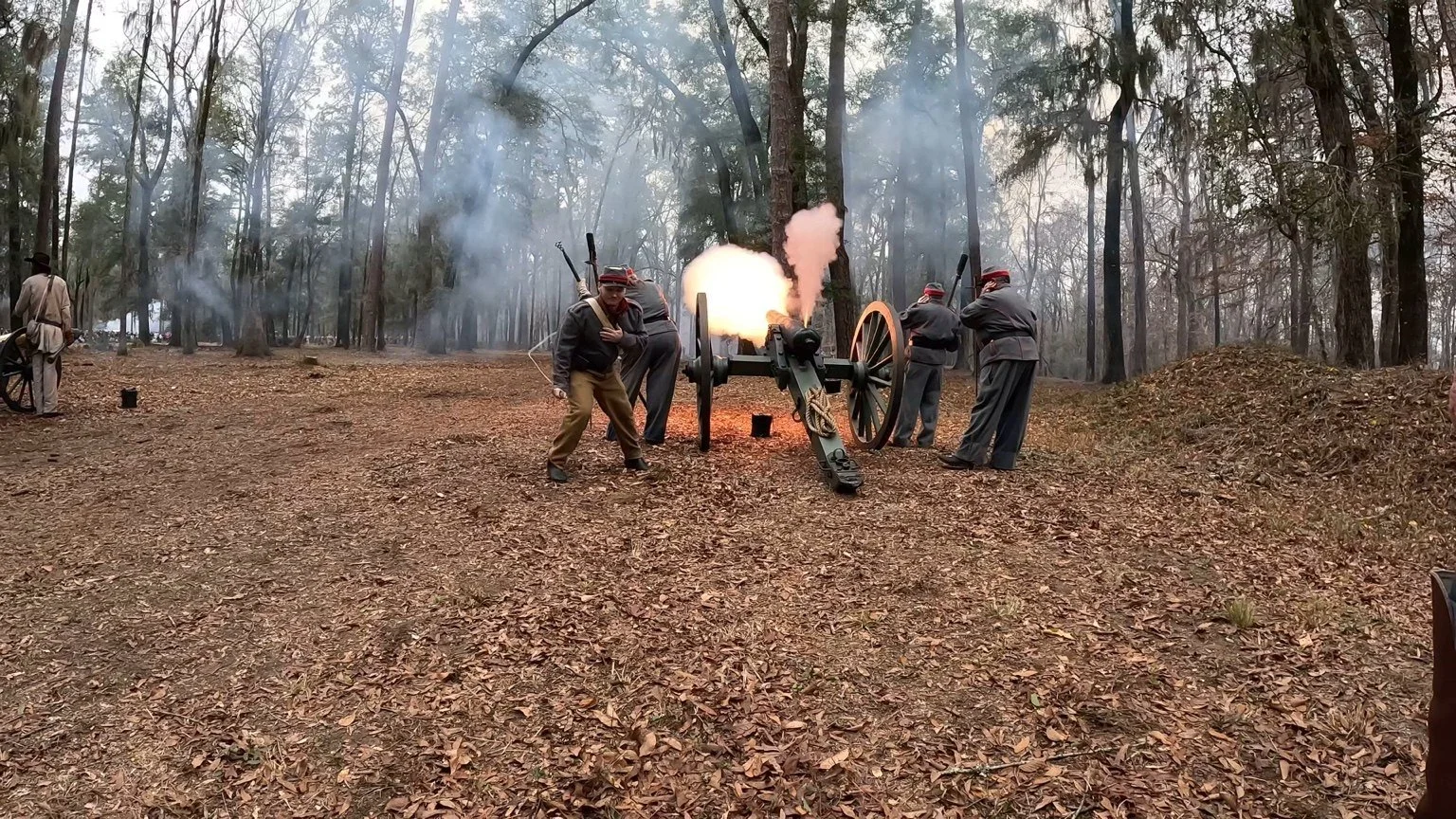
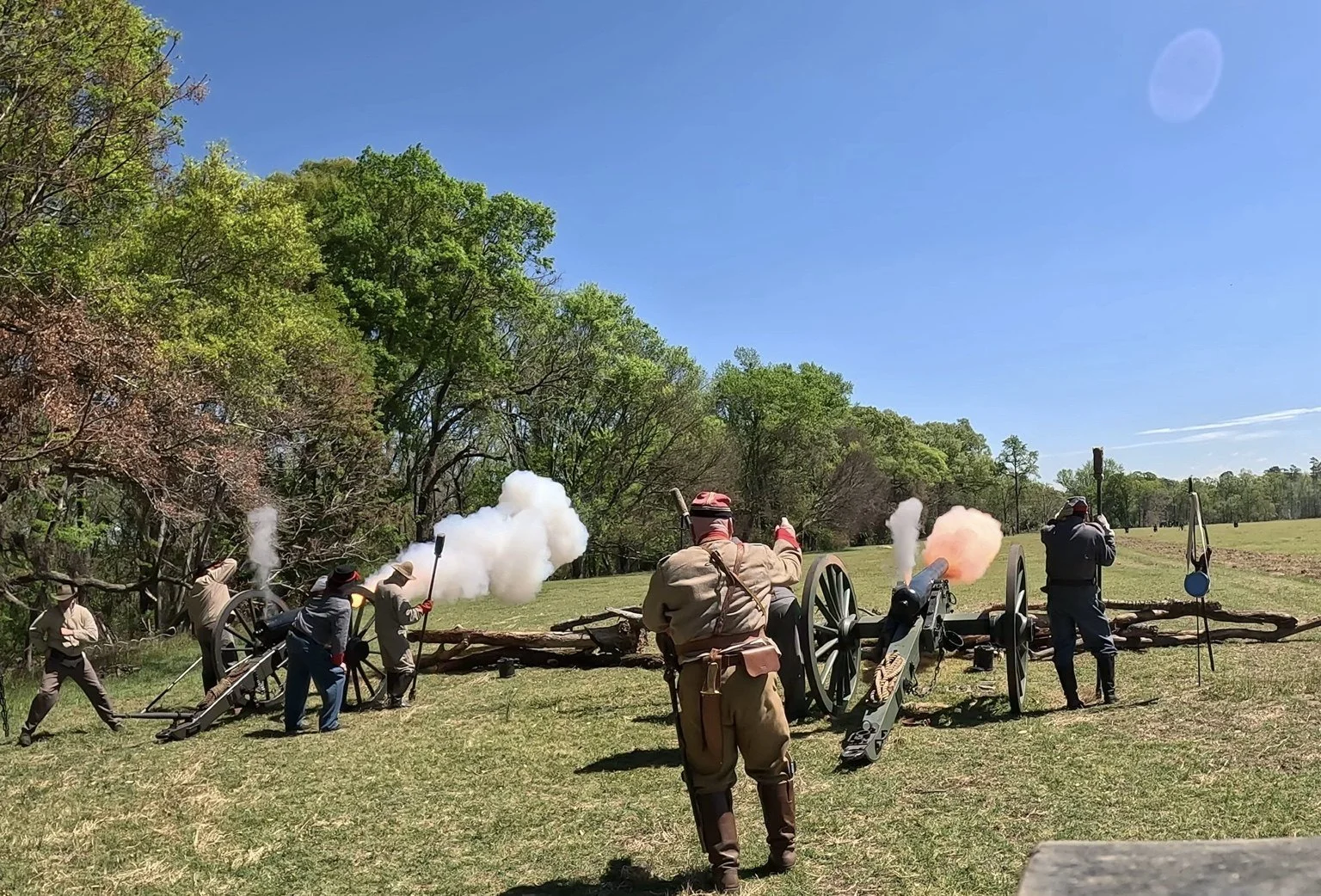
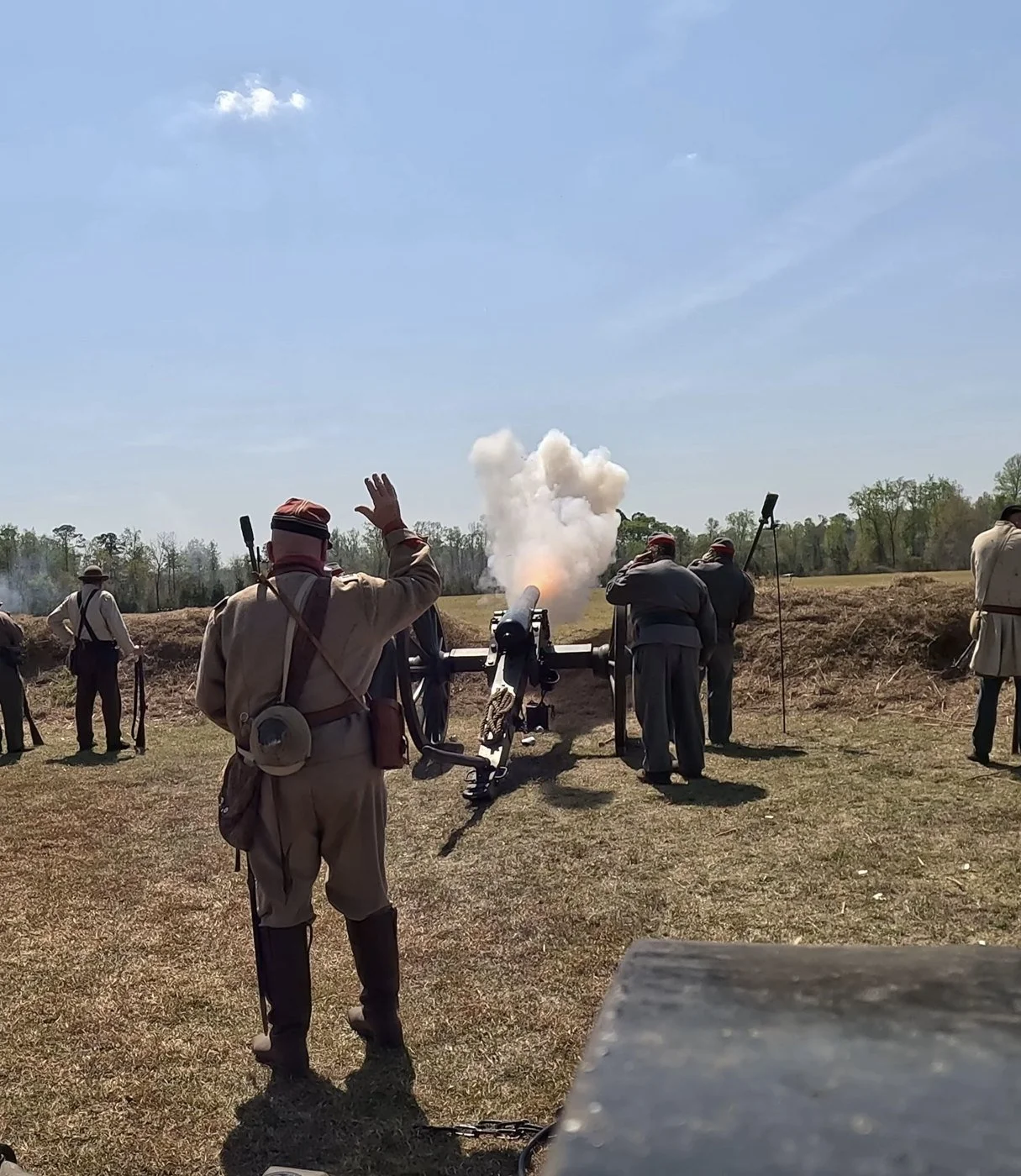
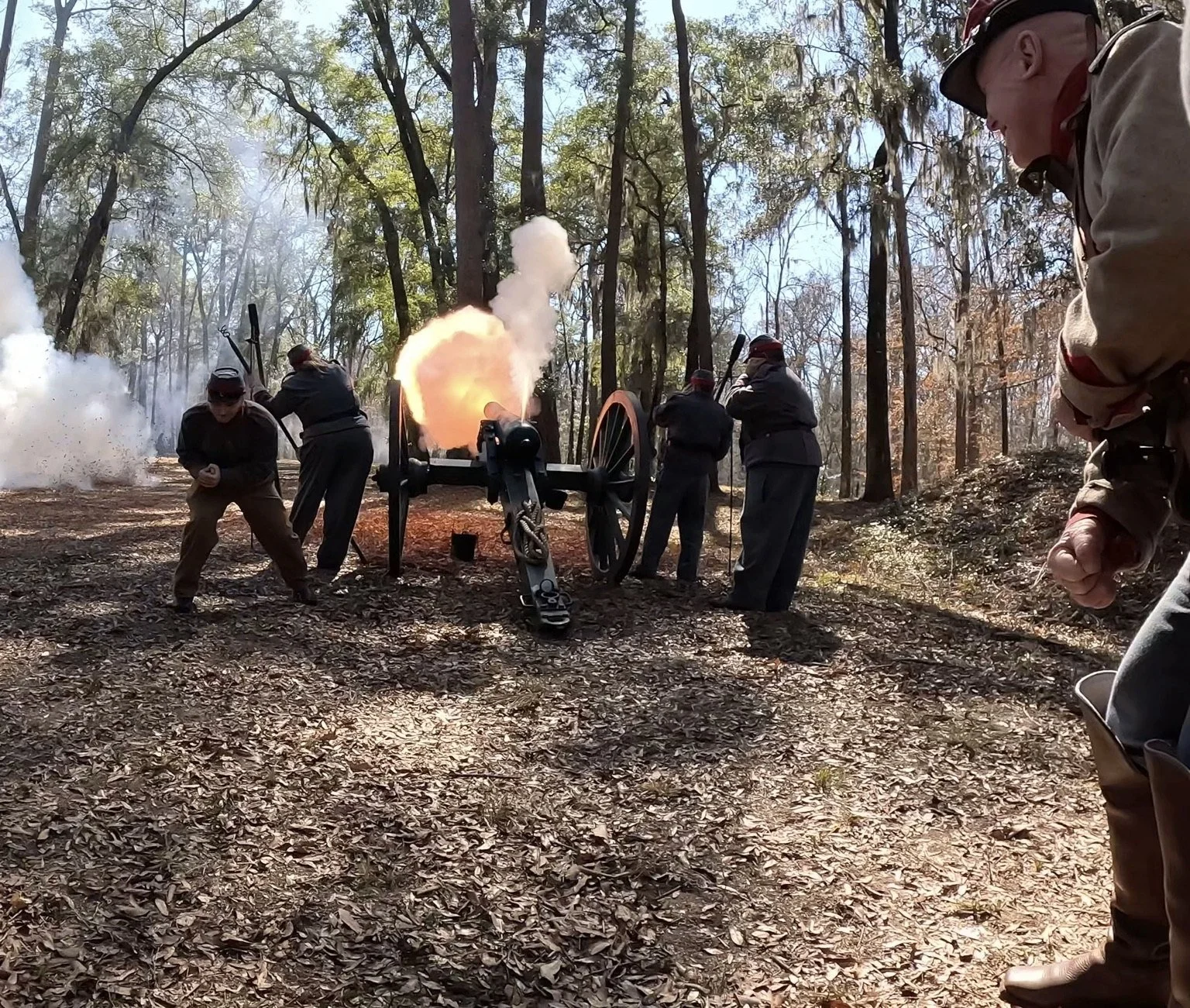
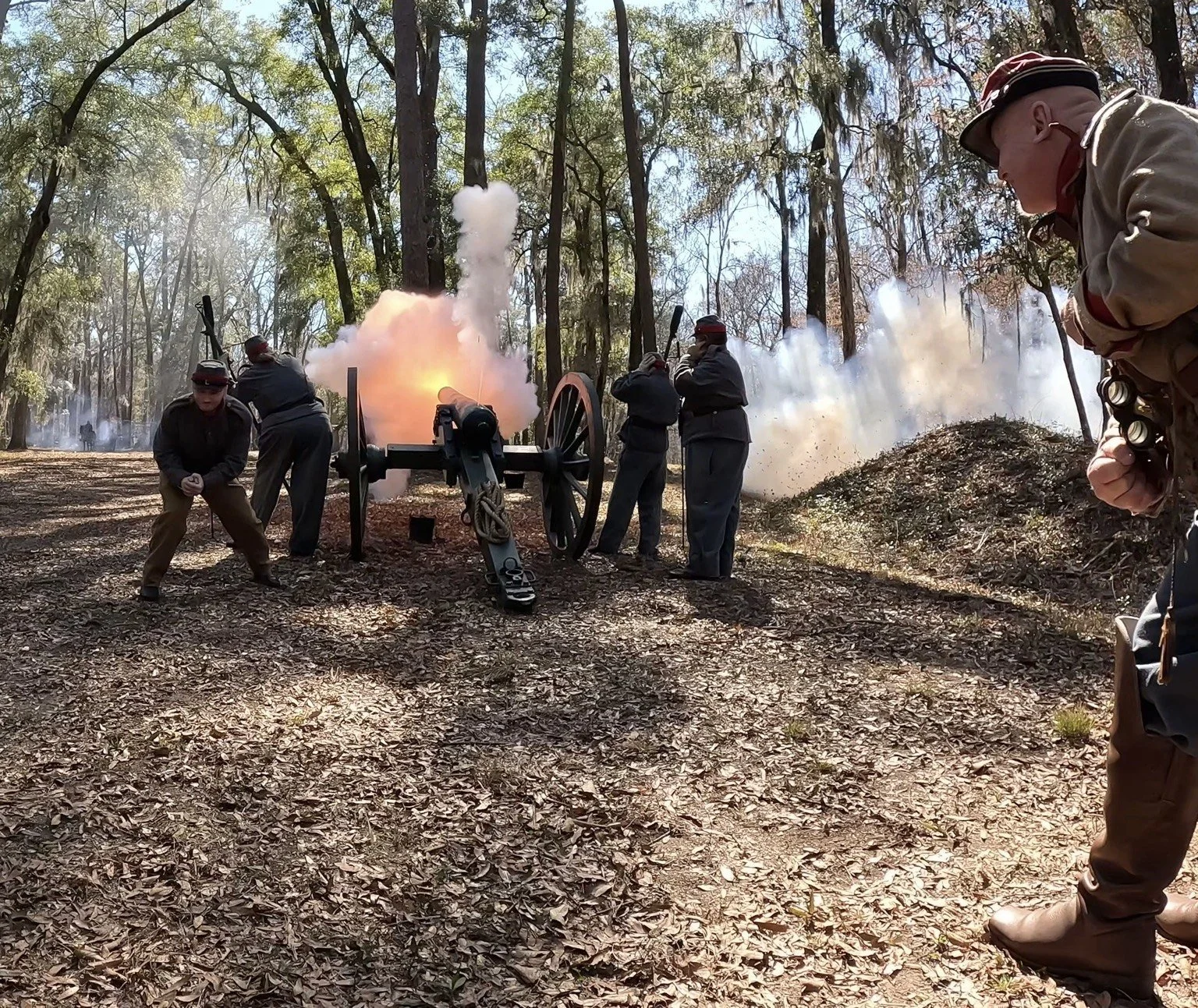
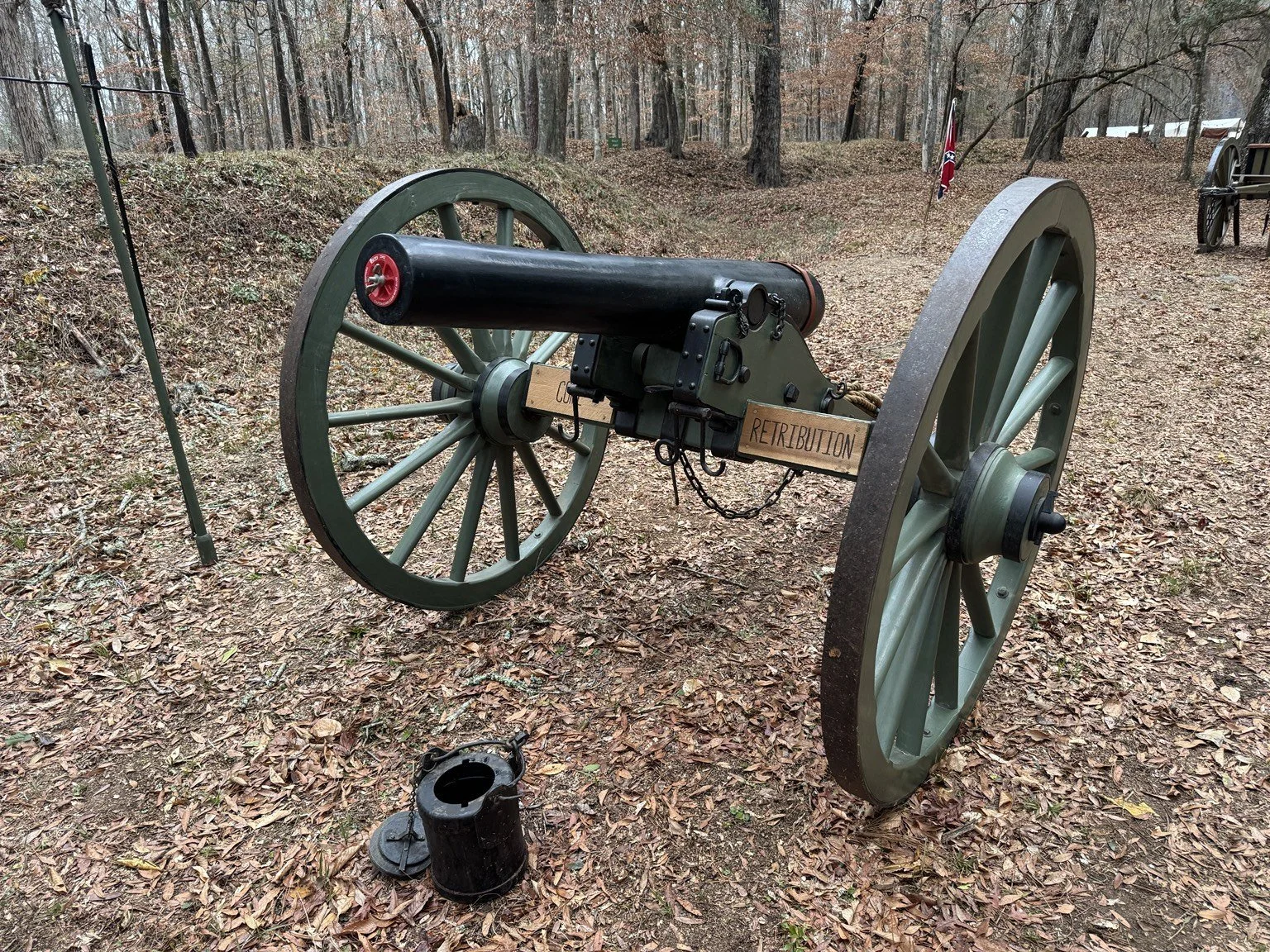
Meet the Waccamaw Light Artillery for Civil War living history, cannon demonstrations, an encampment and period equipment displays. Talk with members about artillery service, camp life and the equipment used by a Civil War gun crew.
A Civil War reenactment will also take place during the event.
Interested in joining? Contact us beforehand and attend as a spectator to meet the unit and learn more.
Photo gallery

Reenactment videos
Gamble’s Hotel — Artillery Reenactment
Cannon-fire highlights from a reenactment depicting the March 1865 fighting near Gamble’s Hotel, South Carolina.
Echoes of Fort Pillow
A Civil War artillery reenactment framed around Fort Pillow, showing cannon drills, firing and gun-crew teamwork.
Storming Fort McAllister
Civil War reenactment footage from the Battle at Manassas event in Claxton, Georgia, depicting the assault on Fort McAllister.
Cannons and Mayhem at Broxton’s Bridge
A short artillery feature capturing cannon fire, smoke and recoil during a reenactment inspired by the fighting at Broxton’s Bridge.
Interested in Joining?
Download joining information · PDF · 1 page
Clothing and equipment standards
Inquire within.
Everyone is welcome to express an interest, including those with no reenacting experience. Civilian portrayals and roles that don’t involve handling weapons are welcome, too.
Your first event
Contact us first, and we’ll invite you to attend an event as a spectator. Your first event is a chance to meet the members, see what we do, and ask questions before taking part.
Membership dues
There are no membership dues.
Before you buy
Contact us before purchasing clothing or equipment. We’ll help you choose items suited to the unit’s portrayal.
Loaner clothing and equipment
A limited selection of loaner clothing and equipment may be available. Please ask when you contact us so we can confirm what’s on hand.
Younger members
Minors are welcome to join. A parent or guardian must be present whenever they participate in unit activities.
Get in touch
Email waccamawlightartillery@yahoo.com, use our unit contact form, or message our Facebook page to arrange your first visit.
Contact Waccamaw
Questions about joining, appearances or the unit?
Email the unitFollow us on Facebook