Francis Marion’s
Brigade
Explore Revolutionary War living history with Francis Marion’s Brigade. Our modern reenactment group portrays South Carolina militia associated with Francis Marion, sharing the history of their service through reenactments, demonstrations and public events.
Interested in joining us or learning more? Get in touch through our unit contact form or Facebook page.
Interested in joining?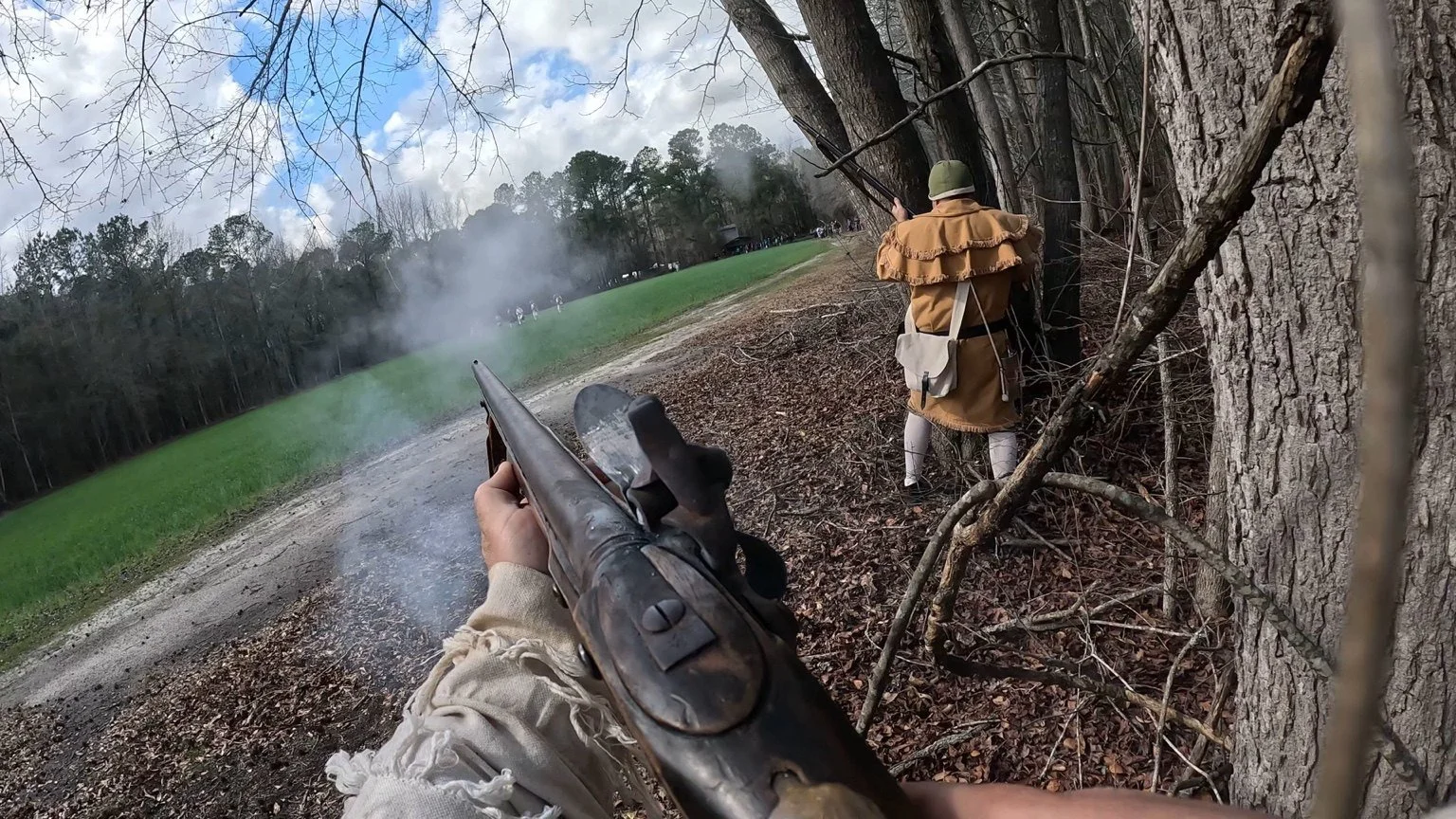
The history behind the portrayal
The present-day Francis Marion’s Brigade is a separate living history organization. Explore the historical account below or download the full approved report, including its source guide and research qualifications.
1. The brigade takes shape
Francis Marion's service before 1780 belongs to a different command history. In September 1779 he issued regimental orders for the Second South Carolina Regiment, while Benjamin Lincoln's directions addressed that Continental regiment and its detachments. These records document Marion commanding troops before 1780, but they do not identify his later militia brigade as already in existence. The contemporary texts are reproduced in The Francis Marion Papers, volume I, pages 126-127. [SRC-002] A letter dated August 17, 1780 directed Peter Horry to gather men from Bonneau's, Mitchell's and Benson's companies, take charge of Lenud's company, and operate along Santee crossings. It is a dated witness to Marion assembling and directing the militia command in 1780. It does not supply a formal founding order or prove that every later brigade member was present. The text is reproduced in The Francis Marion Papers, volume I, page 197. [SRC-002] Marion’s militia command emerged in South Carolina in 1780. Wartime correspondence with Gates and Harrington documents cooperation and movement of prisoners, but its separate letters do not establish a single permanent command chart or the names of every man who served. The October Board arrangement has a date conflict in its printed transmission. A brigade history therefore follows dated relationships rather than assigning all later companies to one unchanged organization. [SRC-190, SRC-266, SRC-267, SRC-268, SRC-269, SRC-270, SRC-271, SRC-272, SRC-484] The brigade orderly book begins in February 1781 and continues to December 1782. Its pages record duty, courts, inspections, supply rules and orders as well as campaigns. It is the best surviving day-to-day institutional witness in the current collection, but it is not a complete muster of the brigade, and an entry directing an action is not proof of performance. [SRC-180]
2. Command, detachments and cavalry
Correspondence between Marion and Nathanael Greene shows requests for intelligence, locations and accounts of operations. Greene’s letter of April 17, 1781 calls for reports; it does not alone define Marion’s command as independent of the Southern Army. Different officers and local forces appear in the record at different times, and cooperation with Lee’s Continentals does not make those troops part of Marion’s militia roster. [SRC-184, SRC-185, SRC-180] Hezekiah Maham’s cavalry was linked to Marion’s command. A postwar account and Marion’s certification describe particular service intervals, while the August 1782 officer arrangement and subsequent directions record later organizational changes. The account’s June 22, 1781 beginning differs from the lower certification’s apparent June 2 reading. Pay coverage, rank, captivity and attendance in the field cannot be collapsed into a single uninterrupted personal timeline. [SRC-422, SRC-360, SRC-361, SRC-460, SRC-461, SRC-462, SRC-463] Original Southern Army returns for April and May 1782 preserve valuable snapshots. April estimates cavalry corps because some returns had not arrived. May reports seventy-two of Maham’s state cavalry fit for action and 364 militia, chiefly unarmed, in its stated categories. Neither return is a named brigade roster, and other Southern Army formations in the same tables should not be reclassified as Marion’s men. [SRC-415, SRC-437]
3. Fort Watson, April 1781
Marion’s April 23 report states that Henry Lee joined him on the Santee on April 14 and that the post at Fort Watson was invested on April 15. The letter describes the difficulty of reaching the fort, the defenders’ water supply and the elevated work associated with Maham. A prisoner list gives five commissioned officers and 109 privates, including seventy-three British privates and thirty-six Tories. Those component categories should not be added again to the total. [SRC-189, SRC-257, SRC-258, SRC-259, SRC-482] The surviving report traditions give two militia killed and three Continentals wounded. The Library of Congress copy sequences, a contemporary newspaper printing and a later checked congressional manuscript copy transmit Marion’s report; repeated copies are not independent battlefield witnesses. The signed original and some related British papers remain targets for exact textual comparison. [SRC-189, SRC-257, SRC-258, SRC-259, SRC-482]
4. Fort Motte, May 1781
Marion wrote to Greene from before Fort Motte on May 12 that the post still resisted. Greene’s subsequent report placed surrender on the twelfth. A contemporary British report from Rawdon mentions fire arrows, but Rawdon received news rather than observing the ignition. Later accounts disagree about the device, the person responsible and the degree of Mrs. Motte’s involvement. Those details should retain their respective witnesses, not be blended into a single confident scene. [SRC-237, SRC-308, SRC-309, SRC-310, SRC-311, SRC-312, SRC-313, SRC-314, SRC-315, SRC-316, SRC-317, SRC-318] Accounts of prisoner numbers and casualties use different categories and transmission layers. A printed Greene text’s words for a gun and an officer differ from later printed versions. Neither discrepancy authorizes a precise gun caliber or a new officer identity without the underlying original and equipment records. [SRC-308, SRC-315, SRC-316]
5. Parker’s Ferry and Eutaw Springs
Marion’s orders near Jenkins Ferry, dated August 31, 1781, thank several divisions for the previous day’s action at Parker’s Ferry. The accompanying return claims eighteen enemy killed; Marion’s later letter uses twenty, and a much later participant narrative gives a still larger estimate. These are attributed statements, not a reconciled enemy casualty roll. Even the action date differs in one opposing newspaper account. [SRC-180, SRC-210, SRC-248, SRC-249, SRC-250] Marion’s command also appears in the Eutaw Springs campaign. The brigade orderly book lists five killed and twenty-five wounded while writing twenty-seven as the grand total. The listed figures add to thirty, but arithmetic cannot silently replace the number actually written. Unit reports and personal reminiscences have different scopes; the report does not turn one entry into an audited casualty total for every participant. [SRC-180, SRC-219]
6. Operations and claims in 1782
The later campaign includes movements around Georgetown, the Santee crossings, Wadboo and confrontations reported at Wambaw and Tidyman. Plans, crossing reports and statements that men returned to a post record different stages. The surviving sources do not furnish a continuous itinerary for every soldier or a securely fixed campsite from broad place names alone. [SRC-199, SRC-200, SRC-201, SRC-202, SRC-203, SRC-273, SRC-274, SRC-275, SRC-276, SRC-277, SRC-278, SRC-279, SRC-280, SRC-281, SRC-282] At Wambaw and Tidyman, Marion, Horry and Maham reported different positions and kinds of loss. Maham’s report discusses an engagement at which he was absent, so it is not his eyewitness description of the fighting. At Wadboo, opposing accounts support an August 29 action and a loss of American baggage or a wagon, but casualty and prisoner counts remain disputed. One opponent’s ten prisoners cover a march and include wounded men left behind; it is not ten documented captives delivered from the battlefield. [SRC-211, SRC-215, SRC-251, SRC-252, SRC-253, SRC-254, SRC-255, SRC-256, SRC-283, SRC-284, SRC-285, SRC-286, SRC-287, SRC-288, SRC-289, SRC-290]
7. Life and work beyond the fighting
Orders and financial records document provisioning, corn and livestock, forage, weapons inspections, ammunition requirements, horses and clothing requests. The March 1780 Bacon Bridge letter reports cartridges unsuitable for the militia’s guns and asks for powder and flints; it does not identify a universal weapon model for the later brigade. Later eight-round and twelve-round orders show standards or instructions, not the amount actually carried by each man. [SRC-181, SRC-321, SRC-337, SRC-342, SRC-343, SRC-344, SRC-345] Clothing evidence is similarly uneven. Reports of goods arriving, instructions to procure garments and officer-account letters do not establish a complete issue to named enlisted men. The brigade’s modern clothing standards are a present-day interpretive policy, not a surviving eighteenth-century uniform inventory. A historically informed portrayal should show documented possibilities and say where delivery and use remain unproved. [SRC-291, SRC-451, SRC-452, SRC-464, SRC-465] The orderly book also preserves rules, accusations, court proceedings, confirmation, remission and acquittal. An ordered punishment is not automatically a performed punishment. Records of civilians, property, surrendered people, Black servants in ration language and prisoners demand careful distinction between a commander’s order and the experience of those affected. This command-centered archive cannot by itself recover everyone’s voice or circumstances. [SRC-180, SRC-183, SRC-197, SRC-199,
SRC-200, SRC-201, SRC-213, SRC-214, SRC-335, SRC-336, SRC-346, SRC-347, SRC-353, SRC-358, SRC-359, SRC-362]
8. Named people and the record’s limits
The research register preserves 154 person-related attestations: officers, men named in orders or lists, court subjects, fiscal claimants and later witnesses. Some may be the same person under different spellings; others are only provisional links. The July 28, 1781 Taylor reverse list has fifteen written names, including a cancelled name and a lieutenant outside the troop brackets. Writing on a proposed list does not prove that each man marched or joined the intended party. [SRC-182] Pension and claim records can add first-person recollections decades after wartime service. Such declarations must be dated, compared with contemporary records and read for what the witness actually knew. A certificate or indent may establish a service or fiscal claim without proving cash reached a specific soldier. The personnel and implementation appendices below preserve these distinctions case by case. [SRC-238, SRC-239, SRC-305, SRC-306, SRC-307, SRC-422, SRC-423, SRC-432]
9. The December 1782 discharge and later accounts
On December 15, 1782, Marion issued an order at Wadboo thanking the troops after the evacuation of Charleston and discharging the country militia from further field service. The wording does not dissolve every state establishment, date every individual’s departure, or settle outstanding compensation. Letters, claims, indents and later pension proceedings continued on separate timelines. [SRC-180, SRC-192, SRC-291, SRC-292, SRC-390, SRC-422, SRC-434] The record supports a substantial history of Marion’s command, but it does not support a complete soldier census, a universal uniform, one reconciled total for every battle, or a final payment history for every claimant. This report will be revised when new primary evidence changes a material conclusion. An unchanged research lead is not itself a new finding.
As new information is found and verified in primary sources, we will update this history and its citations.
Download the full history · PDF · 80 pagesCitations in square brackets refer to the source guide in Appendix D of the full report. Orders, reported results and later recollections retain their distinct evidence limits. Revised edition: 28 October 2026.
Upcoming events
Francis Marion’s Brigade at SwampFest
Playcard Environmental Education Center
10729 W Highway 19, Loris, SC
Free admission · All ages welcome
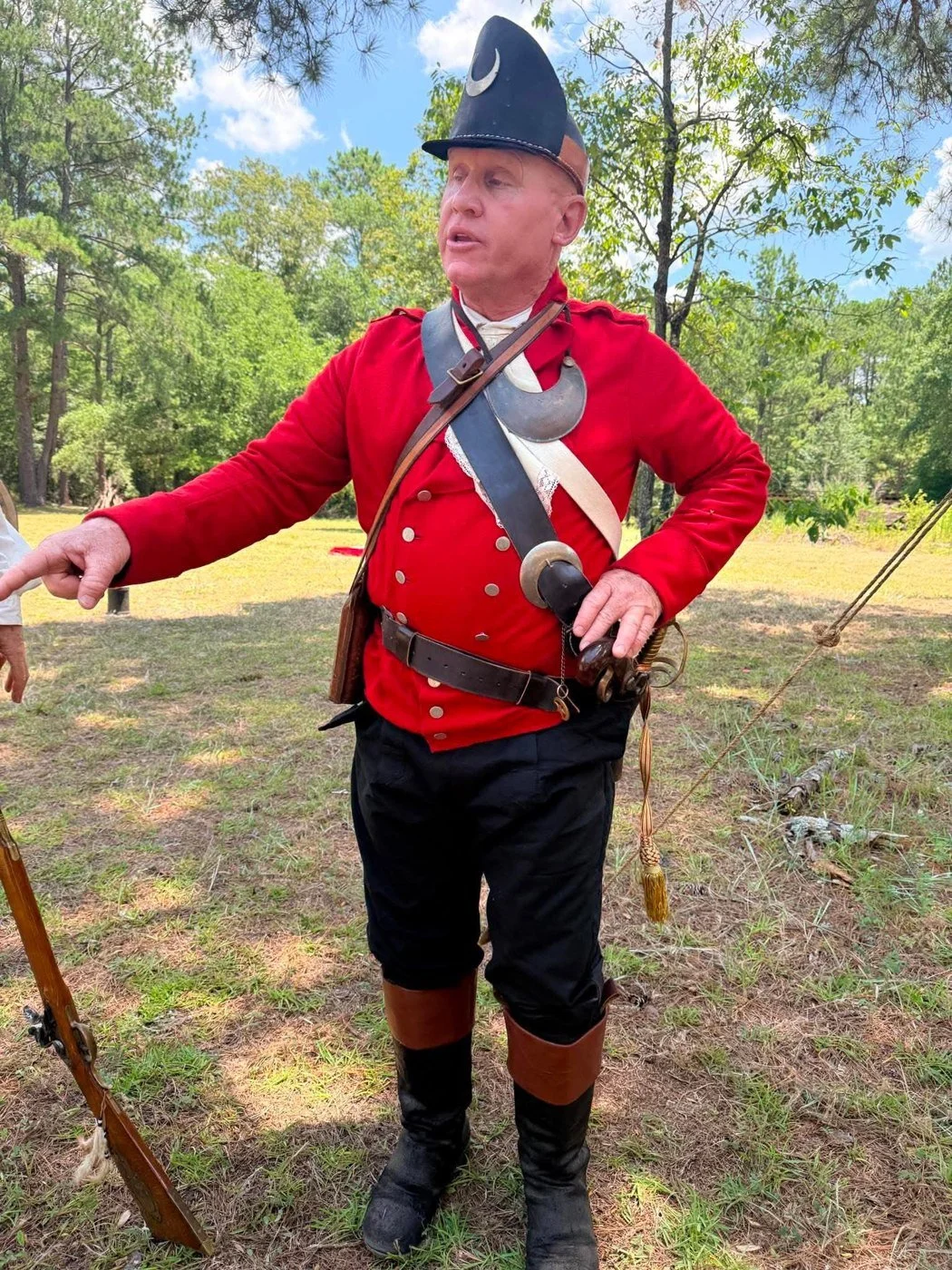
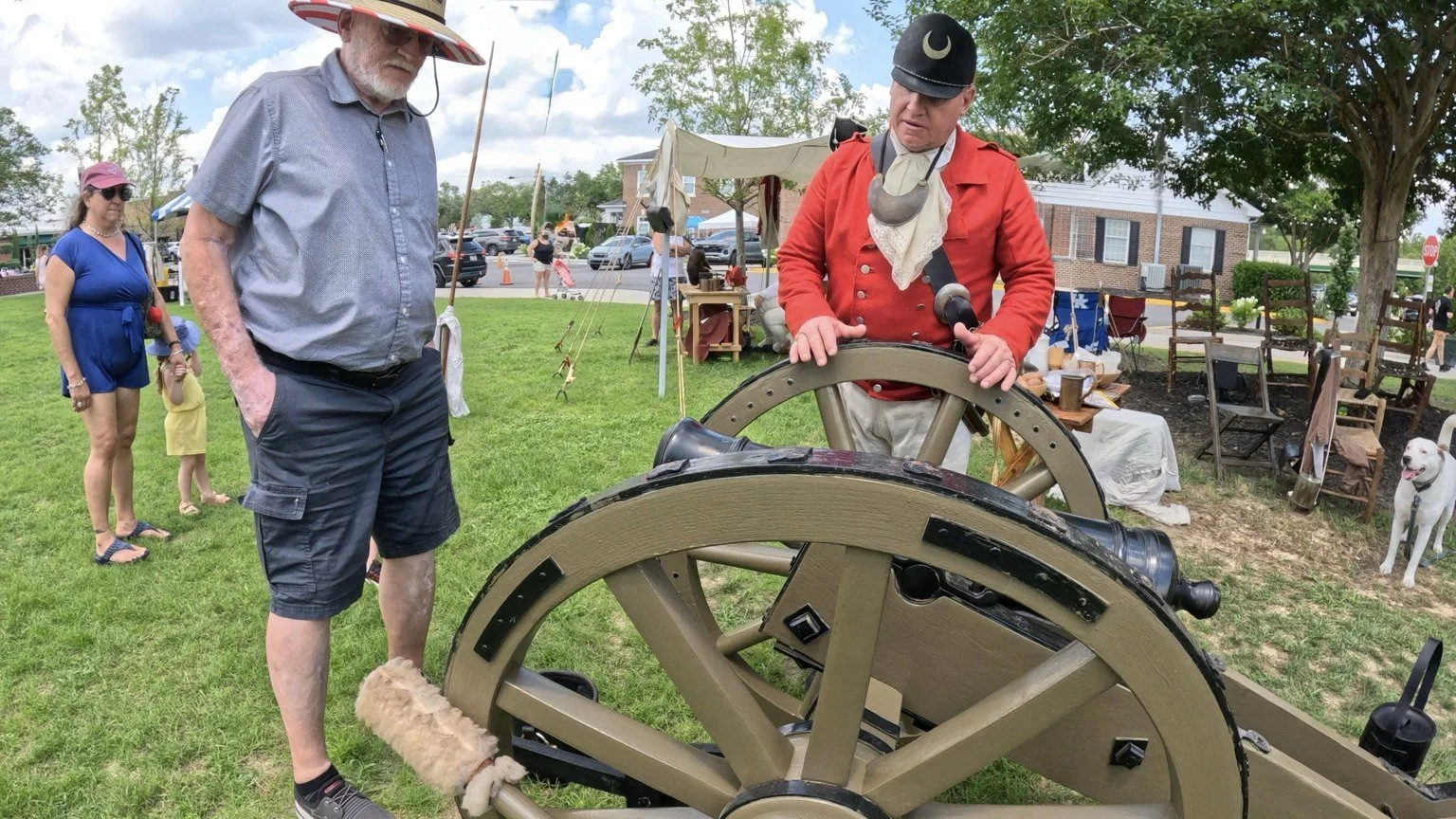
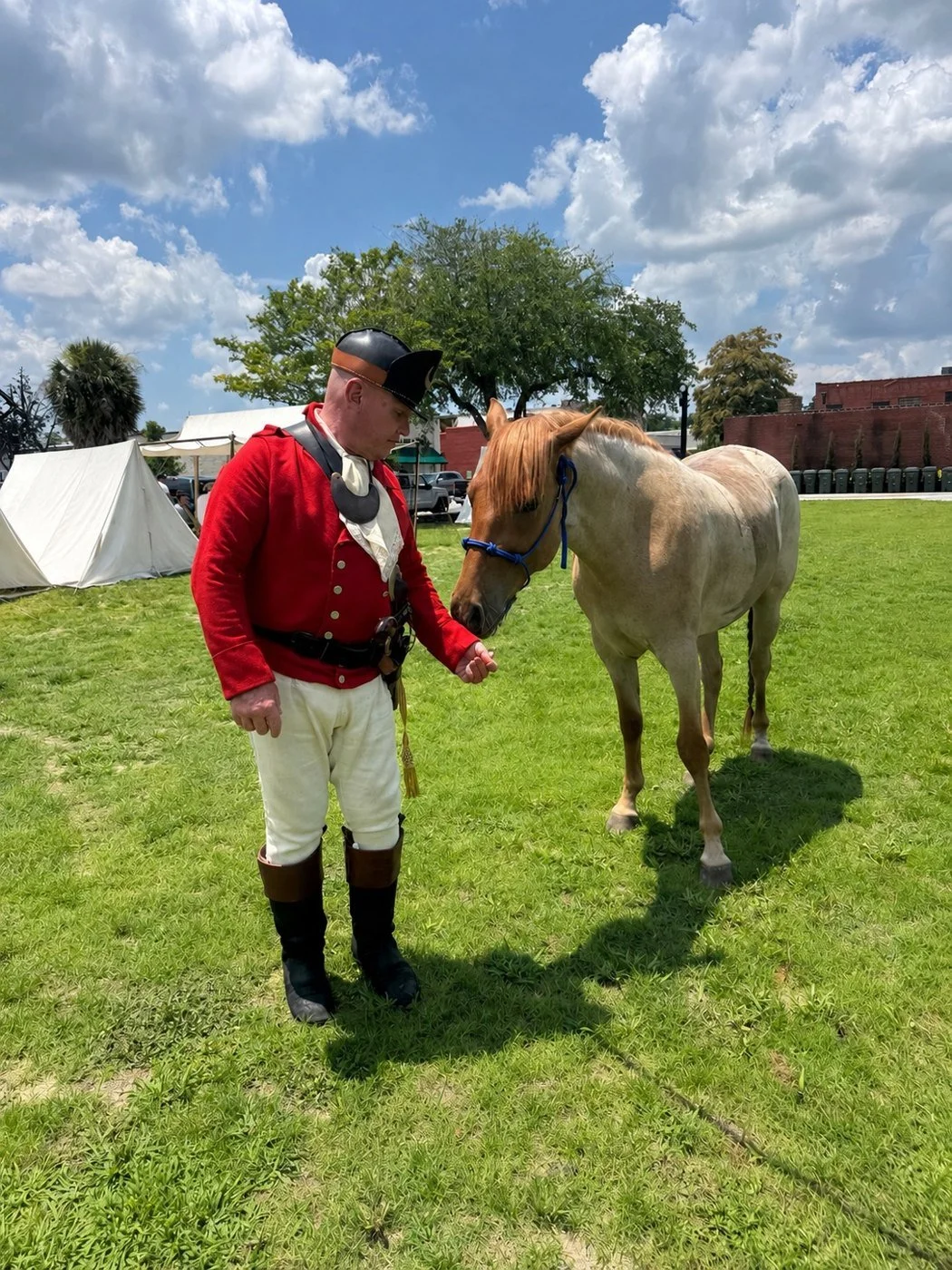
Explore Revolutionary War living history with Francis Marion’s Brigade through cannon demonstrations, an encampment and period equipment displays. Meet the reenactors and ask about militia service, camp life, clothing and equipment.
A Revolutionary War reenactment will also take place during the event.
Interested in joining? Contact us beforehand and attend as a spectator to meet the brigade and learn more.
Photo gallery
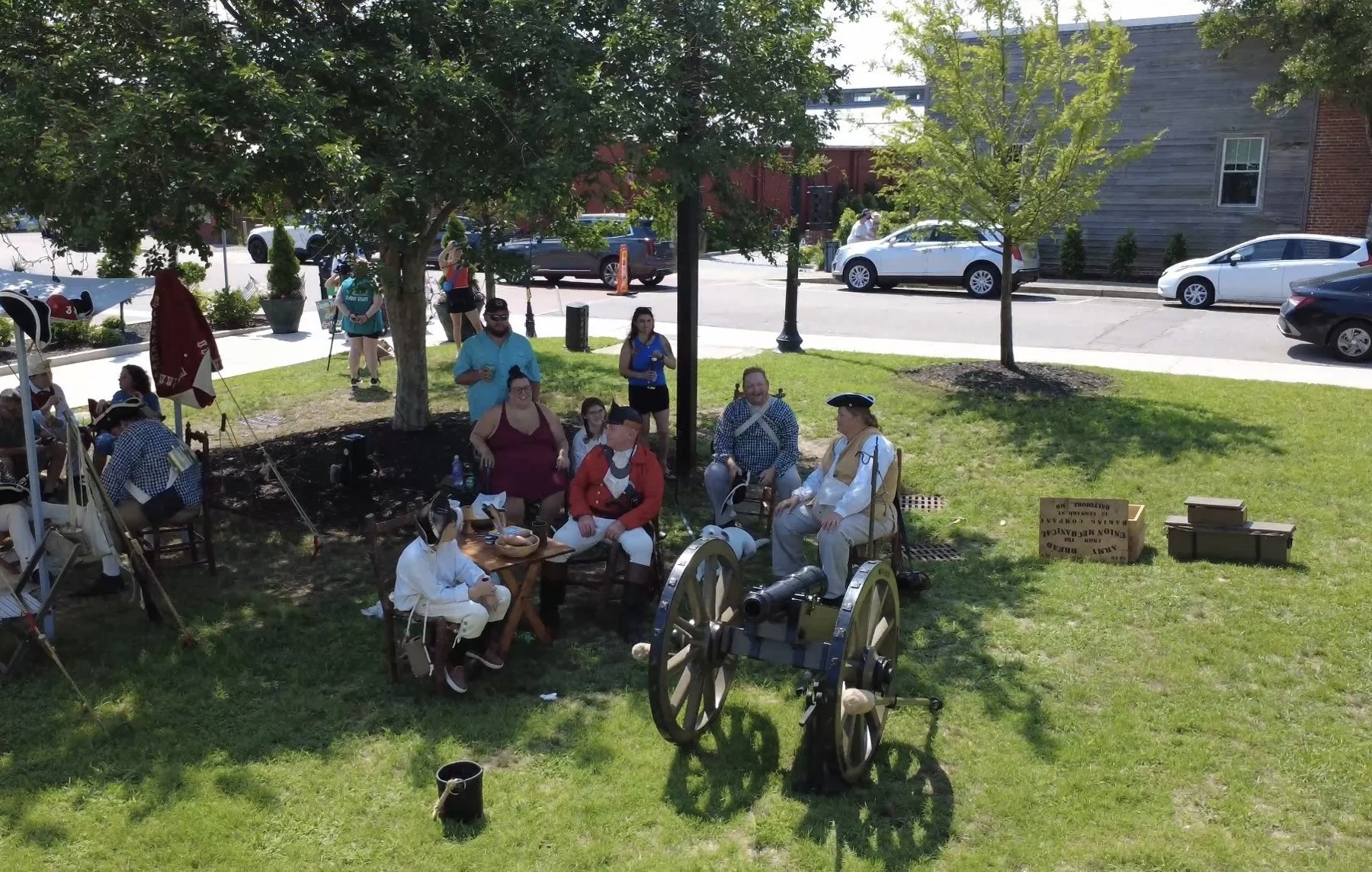
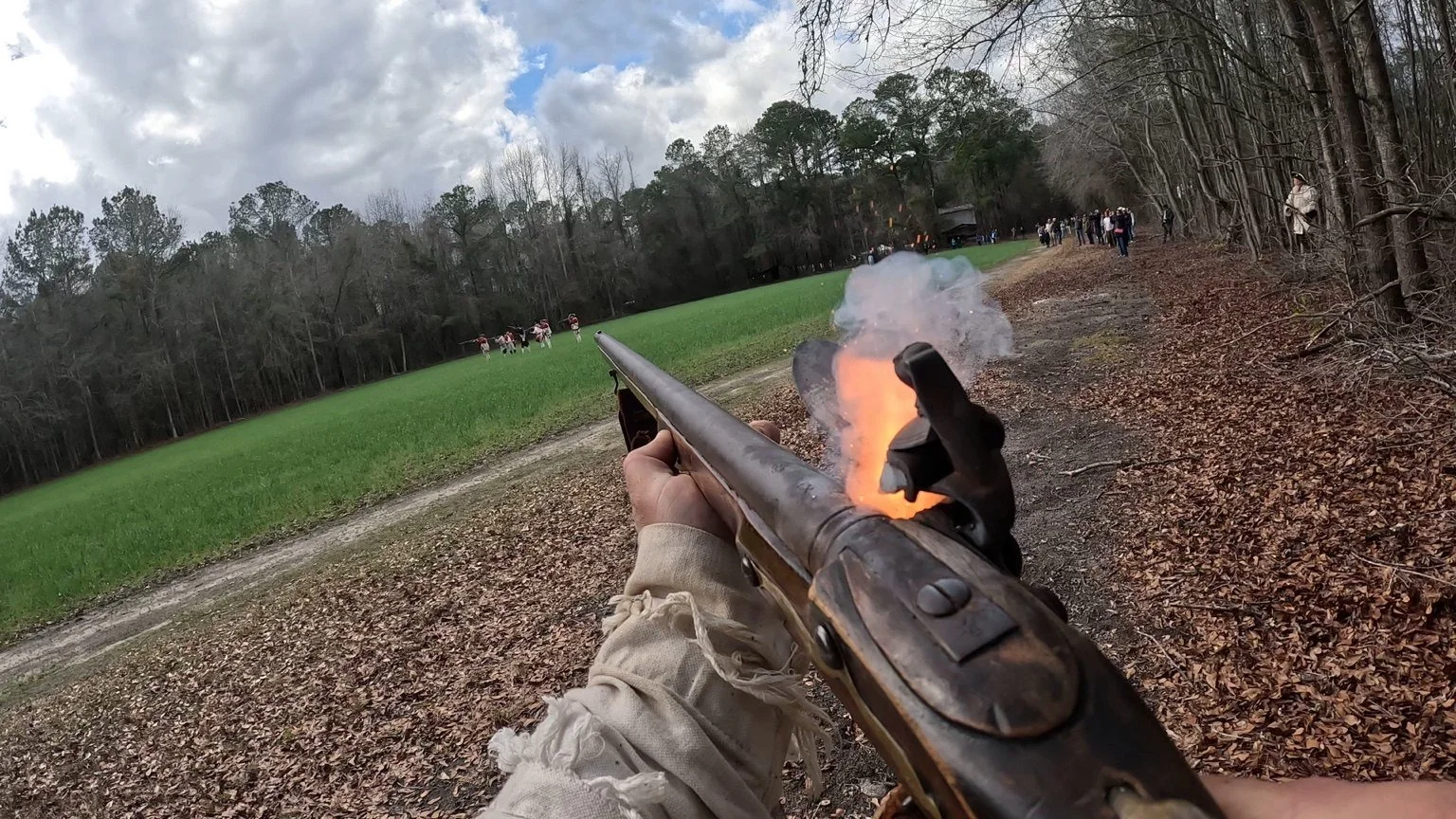
Living history videos
Francis Marion — Field Tactics Reenactment
An interpretive Revolutionary War reenactment exploring concealment, wooded terrain and movement associated with Marion’s style of warfare.
Revolutionary War Living History in Conway
Join Francis Marion’s Brigade in Conway, South Carolina, for cannon demonstrations, blacksmithing and Revolutionary War living history.
Riverfest 2026 — Drone View
An aerial view of the brigade’s Riverfest living-history activities in Conway, featuring militia portrayals, muskets, artillery and historic trades.
Clothing, gear & camp standards
Current version · 29 October 2026
Download the full standards · PDF · 4 pages
Read the full Brigade standards
This document serves as a living guide for members of Francis Marion’s Brigade and will continue to evolve as new research and historical understanding come to light. We recognize that assembling a proper impression can be a significant investment, and new members are not expected to acquire the highest-quality clothing and equipment immediately. Instead, impressions should be viewed as ongoing projects, with steady progress toward improved authenticity over time.
The items outlined below are categorized as “Inappropriate,” “Good,” and “Best.” Members are encouraged to work toward achieving at least a “Good” standard within a reasonable timeframe, generally within two years of active participation.
A strong and convincing impression is not built on uniformity alone. The men who served in the brigade did not appear identical, and neither should we. Variability in clothing and equipment—within documented and appropriate limits—helps create a more accurate and visually authentic portrayal.
The operational region of Francis Marion’s Brigade in 1780 was largely settled but remained closely tied to the frontier. As such, impressions should reflect a blend of more refined town dress alongside simpler, more utilitarian garments. Period evidence also indicates cultural exchange with local Native groups, particularly the Catawba, influencing certain elements of dress and material use.
Despite the relative distance from major urban centers and European markets, inhabitants of this region were not isolated from broader trends. Contemporary fashions were still followed, adapted, and interpreted through locally available materials.
It is important to note that ready-made clothing was not widely available in towns such as Salisbury, Camden, or Charlotte Town. Most garments were produced locally from imported or regionally acquired materials, reinforcing the need for practical construction and appropriate fabric choices.
Additionally, portrayals should avoid overemphasizing the “longhunter” or backwoods hunter stereotype. While such individuals certainly existed, they were not representative of the majority of men in this region. Impressions should reflect the more common civilian and militia appearance of the time.
The following guidelines will proceed from head to toe, beginning with undergarments and working outward.
Clothing
Hat:
Men wore hats. There were hundreds of styles of hats, the most common of which is a simple round hat, with a brim cut round, and bent up to the owner’s taste. Linen caps were also common.
- Inappropriate: Straw hats, 4-panel cotton or linen caps, scarves tied around the head, and no hat
- Good: Black round brim hat, tricorn hat, fantail hat, etc.
- Best: Black round felt hat
Neck Stock:
Wool, leather, horsehair, silk, linen and cotton.
- Inappropriate: Not having one, bright colored silk
- Good: Linen or cotton
- Best: Black horsehair with buckle
Shirt:
Standard 18th century style in white or unbleached linen, checks, or stripes. Single button at the neck. Thin cuffs. Shirts were underwear and should reach mid-thigh. Not tight fitting.
- Inappropriate: Civil War era, pirate era, or Celtic/medieval
- Good: White or off-white cotton, small “windowpane” check
- Best: Linen off-white or small checked
Waistcoat:
Many images show men working without waistcoats, especially in the Carolina heat. Mid-century waistcoats were straight cut and could range from crotch length to knee length. Some had sleeves.
- Inappropriate: Canvas material, Civil War cut, upholstery fabric
- Good: Cotton or wool in solid colors
- Best: Linen in solid colors
Jacket or Coat:
Includes frock coat or hunting shirt.
- Frock coat: Mid-century cut, straight front, fuller skirts, thigh-length, wool or linen
- Hunting shirt: Wraparound style (not pullover), linen preferred
- Inappropriate: None (must have an outer garment)
- Good: Cotton or linen frock coat or wraparound hunting shirt
- Best: Linen or wool frock coat or wraparound hunting shirt
Breeches or Trousers:
Fall front or fly front styles.
- Breeches: Knee-length, fitted, linen or wool, buckle or button closure
- Trousers: Linen or wool, fitted
- Inappropriate: Straight leg fall-front trousers (1820s style)
- Good: Cotton, canvas, or wool solid colors
- Best: Linen or wool solid colors
Stockings:
Required with breeches. Cotton or wool, solid colors.
- Best colors: Off-white or grey
- Secondary: Blue or black
Leggings (Optional):
Adopted from Native influence, used for protection.
- Inappropriate: Civil War styles, baggy, bright colors, decorated
- Good: Wool or leather fitted
- Best: Buckskin fitted just above knee
Garters:
Used to hold stockings up.
- Inappropriate: Wide fringed straps
- Good: Woven straps ~1 inch
- Best: ½ inch black leather with small buckle
Footwear (Required):
- Inappropriate: Modern shoes, jack boots
- Good: Black leather laced shoes, trekkers, or modern shoes with spatterdashes
- Best: Black leather colonial buckle shoes
Other Clothing (Optional):
- Wool cloak or cape (knee-length or longer)
- Wool gloves or mittens
- Wool blanket
Gear
Canteen (Required):
- Inappropriate: Stainless steel (not defarbed), glass
- Good: Tin, leather, wood, or gourd
- Best: Period-correct wood or tin
Mess Kit:
- Tin or copper cup
- Bowl
- Spoon
- Two-tine fork
- Optional plate (trencher)
- Cloth napkin
Shooting Bag / Cartridge Box:
- Required if carrying a firearm
- Shooting bag: Leather or wool
- Cartridge box: Leather with wooden block
- Inappropriate: Fringed or later-period designs
- Good/Best: American or British military pattern or simple leather bag
Haversack (Optional):
- Prefer linen; cotton or leather acceptable
- No stripes or embroidery
- Market wallet style preferred
Knife (Optional):
- Folding or belt knife
- No bowie knives
Belt Axe (Optional):
- Period correct with leather blade cover
Knapsack / Bedroll / Tumpline (Optional):
- Linen, canvas, or wool
Camp Gear
Tent:
“A” frame tent preferred (7’ long, 6’ tall, 8’6” wide), treated canvas, 9 stakes.
Chair:
Not period, but allowed. Simple ladder-back or sit on ground/log.
Inside Tent:
Modern items allowed if hidden. No open flame with straw bedding.
Interested in Joining?
Download joining information · PDF · 1 page
Everyone is welcome to express an interest, including those with no reenacting experience. Civilian portrayals and roles that don’t involve handling weapons are welcome, too.
Your first event
Contact us first, and we’ll invite you to attend an event as a spectator. Your first event is a chance to meet the members, see what we do, and ask questions before taking part.
Membership dues
There are no membership dues.
Before you buy
Contact us before purchasing clothing or equipment. We’ll help you choose items suited to the unit’s portrayal.
Loaner clothing and equipment
A limited selection of loaner clothing and equipment may be available. Please ask when you contact us so we can confirm what’s on hand.
Younger members
Minors are welcome to join. A parent or guardian must be present whenever they participate in unit activities.
Get in touch
Email francismarionsbrigade@aol.com, use our unit contact form, or message our Facebook page to arrange your first visit.
Contact the brigade
Questions about joining, appearances or the unit?
Email the unitFollow us on Facebook